
 Dec 17, 2025
 3 min read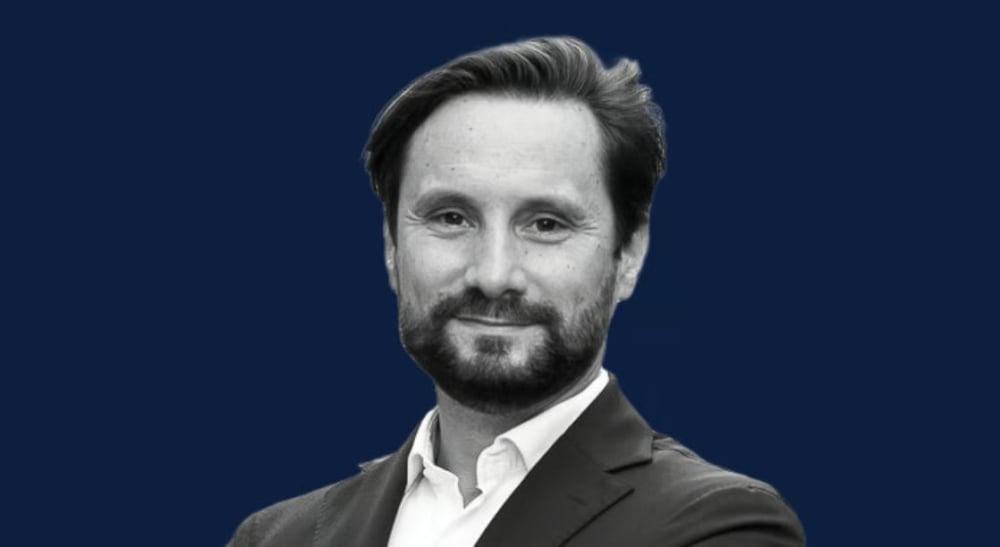
Driven by the “France 2030” plan, French reindustrialization already seems to have stalled.Behind the speeches on taxation or the cost of labor, other deep obstacles slow down the dynamic: a technocentric culture, a lack of managerial innovation and a little-known network of mid-sized companies.
"Reindustrialization: 4 realities that worry and explain France's current failure"
Toni da Motta Cerveira
Tony da Motta Cerveira
Jodi Tony da Motta Cerveira, Principal in Environmental Management (*)
In France, discussions on reindustrialization are more active than ever, thanks to ambitious plans such as the “France 2030” plan.However, this slowdown in dynamics is already felt and the reasons are the same: labor costs, taxes, administrative complexities, etc.What if the real obstacles lie elsewhere, hidden behind false evidence?Four counterintuitive realities about the obstacles and little-known levers of the French Industrial Renaissance may surprise you.
France suffers from a stubborn paradox.On the other hand, it excels in basic research, holds the second place in the number of Nobel Prizes, and submits thousands of patents each year.On the other hand,We are struggling to rank as a sustainable industrial and commercial success according to the European ranking between 11 and 12 in terms of innovation (according to the Global Innovation Index or European Innovation Scoreboard).Like our 2025 economic Nobel Prize, France cannot escape his “technological heatstroke”.The French are still stuck in the deeply-rooted belief that they can create disruptive technologies for themselves to find their markets instinctively.
In France, this focus on technology is explained by a culture that devalues management science for a long time in favor of "hard science", forgetting that the change from production to production is higher than social and organizational processes.Successful plans, including France 2030, perpetuate this idea by focusing on financial technology rather than the important culture of innovation management.This culture of innovation, which is far from being seen in the main technological events, is associated with surprises among the most powerful players in our industry: Medium Companies (ETI).
While the spotlight often focuses on startups and large enterprises, the strongest protagonists of the industry recovery are mid-sized companies.In fact, their performances, often little-known, are spectacular and reflect the true face of art restoration.The numbers speak for themselves.By 2022, mid-sized companies will employ 35% of the industry's full-time equivalent (FTE) workforce, surpassing large companies today (32%).Between 1994 and 2022, the share of medium-sized companies in industrial employment increased by 7.5 percentage points, while the share of large companies increased by only 2.3 points, and SMEs decreased by 10 percentage points.Point: From 2022 to 2024, medium-sized companies opened nearly twice as many factories as large companies.
Acting as true "local producers", medium-sized enterprises develop industry in new departments, often outside the main historical areas, thus strengthening the regional network.Their success is based on production methods that are far from textbook: they win in global markets or achieve economies of scale by conquering many small markets.So this mid-sized enterprise-led force is threatened by a report from a country that ignores them in favor of technical technical bets.
The push for reindustrialization is showing signs of slowing, with just 114 industrial parks opening in 2024, down from 170 in 2023, according to the government's industry barometer.This slowdown shows France's "managerial myopia", which involves relying everything on technology while neglecting human and organizational resources.
Olivier Lewancy, during his hearing at the Economic Affairs Committee, perfectly summed up this shortcoming: "Since 2009, we have wanted to re-industrialize on one foot, on a crawl, only through big bets on technology. From an industrial point of view, it is like building castles on sand."
This statement indicates reality: a baseball bet is a virginity because of the "Base Industrial" you need "by the age of technology.The Smele's Smele's Smele's Domains and Economically destroyed and the property is destroyed to move from ideas to public products.Don't mistake, the end is not left to leave the technical, but the right to add this investigation with a bold management.The company changes their own schools to practice their future talents and show the way to progress.If the skills were lost, the valuable driver is the way to be born again.
If mid-sized companies are the heroes of our industrial renaissance, why do we have so many of them?The answer is cultural, not economic, and lies in a deep psychological brake identified by Yvon Gattaz more than a decade ago: "the cult of the teddy bear."
This concept refers to the "refusal of the spirit of growth", a cultural concept that motivates many SME operators to stay small instead of taking the necessary steps to become an ETI.The fear of this growth, which is often ignored in research, represents a major obstacle to the emergence of the "hidden champions of our economy", these companies should be the backbone of our corporate governance.This is a real flaw in our social policy: we are looking for solutions in Excel spreadsheets, while the main obstacles are in our traditional applications.
The success of France's reindustrialisation will not depend on billions in future technological investment, but rather on our ability to carry out a profound cultural and managerial transformation.This is about training innovators instead of inventors, supporting the growth of SMEs into ETIs, and investing in human and machine skills.Investment plans aside, is France finally ready to lead the management revolution essential to its industrial sovereignty?
(*) Tony Da Motta Cerveira leads the innovation expertise of consultancy Square Management, supporting decision-makers with responsible innovation strategies (CAC40 and Industrial ETI).Tony was previously Director of Industrial Innovation and contributed to the development of many innovations in France.He is also a member of the Industrial Impact Startup Advisory Board.Tony holds a Master's degree in Innovation Management Studies from Ecole Polytechnique in Paris.
Most read topics
Russian oil: the "spirit plane" of Rosneft and Lukoil continues to fly to India and China.
Philippine Leroy-Beaulieu: "I was called a bastard because I turned down the offers of some directors"
The French population continues to grow, "mainly thanks to net migration" (INED)
Strong signal for 2026: India dethrones China in executives' and investors' long-term strategies
« Je veux être un président de combat », Frédéric Carré est candidat à la présidence de la Fédération française du bâtiment
Automobile : le prolongateur d’autonomie (Erev), un pari chinois qui consomme 6,4 litres/100 km batterie vide
Automobile : Stellantis juge insuffisante l’ouverture de Bruxelles sur l’électrification
Portières de voitures, machines à laver... 180 produits seront désormais frappés par la taxe carbone européenne
Aménagement de la montagne : les communes lèvent le voile sur leur texte de loi « transpartisan » pour 2026
Pierre-Étienne Bindschedler, PDG de Soprema : « Nous avons un plan d’investissement de 1,2 milliard d’euros »
Commerce en ligne : 800 millions de colis chinois inondent la France, la moitié à moins de 3,40 euros
L’avenir incertain des projets alimentaires territoriaux
Arvamus."Architects, Sovereignty and the Lever of Industrial Resilience"
Daniel Labaronne, EPR Deputy: "Some financial activities evade AMF control"
Washington threatens retaliation against Mistral AI, Spotify or Publicis if EU doesn't comply with digital regulations
opinion"Leadership under pressure: How to reconcile performance and mental health?"
Warner Bros. Discovery: Why the Board Prefers Netflix's Lower Offer Over Paramount's Offer
Quantum: France still on Europe's top three patent listings
Vacant property taxation: the threat of a much heavier bill for owners
Popular with the under-35s, Merchant Republic focuses on retirement savings in Europe
Opinion "Deglobalization: The real challenge is not compliance, but value creation"
LGV Bordeaux-Toulouse: public reporter rejects complaints from environmental groups
Clermont-Paris: Jean Castex goes to Auvergne the day after the price freeze announcement
Car: Range Extender (Erev), a Chinese offering that consumes 6.4 l/100 km from an empty battery
VIEW. “Benin is resisting the coup!...”