
 Nov 18, 2025
 3 min read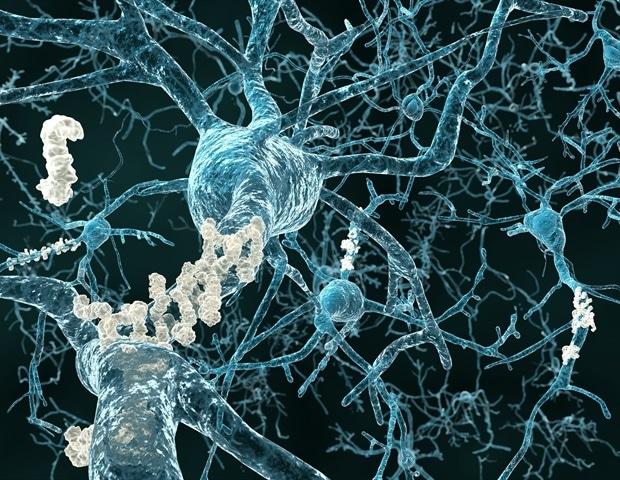
One of the worst times for family members of an Alzheimer's patient is when they forget who they are.New research from the University of Virginia School of Medicine may explain why this happens and may lead to a way to prevent it.
UVA's Dr. Harald Sontheimer and graduate student Lata Chaunsali and their colleagues discovered that the inability to recognize family, friends and caregivers is caused by the breakdown of the protective "nets" that surround the brain's nerve cells.Preventing the loss of these fibers in lab mice protected the mice from losing their memory of previous social interactions.
The results provide an interesting target for developing new treatments to help patients with Alzheimer's disease, the researchers say.
"Finding a structural change that explains specific memory loss in Alzheimer's disease is very exciting," said Sontheimer, chair of the UVA Neuroscience Department and member of the UVA Brain Institute.
This is a completely new target and we already have suitable drug candidates.
Harald Sontheimer, Department of Neuroscience, University of Virginia Health System
Alzheimer's: a growing problem
Alzheimer's disease affects 55 million people worldwide, and this number is expected to increase by 35% in just five years.In response, UVA has established the Harrison Family Center for Translational Research, which aims to advance the development of new treatments and cures for some of the world's most challenging diseases, including Alzheimer's disease.
Sontheimer's new work sheds important light on the development of the disease.He and his team previously demonstrated the importance of so-called "perneuronal networks" in the brain.These mesh-like structures surround nerve cells called neurons and act as an important barrier that allows neurons to communicate properly.These connections allow neurons to form and store new memories.
Based on these findings, the relationship with his friends is suspected to be the problem of communication of the problem of Alzheimer's disease.Their recent work confirms: Scientists found that Laboratory Mice with communication disorders lost their ability to remember new things.This mirror is what we see in people with Alzheimer's disease, where memory loss is common.
Sontheimer and his team then used "MMP inhibitors" -- a class of drugs already studied for their potential in treating cancer and arthritis -- to see if they could prevent the loss of perineuronal networks.It worked.This approach prevented network degradation and preserved the mice's social memory.
"In Alzheimer's disease, people experience a loss of social memory
The changes seen in the brain of Hice correspond to those observed in Alzehim patients, and it is suggested that the human network can be achieved.Development of treatments based on the results of additional research, but the disease and Canunsuli are expected in the future.
"Although we have drugs that can delay the loss of perineural networks, thereby delaying the loss of memory in the disease, more research needs to be done on the safety and effectiveness of our approach before we can evaluate it in humans," Sontheimer said.reinforces the suspicion that these protein aggregates may not be the cause of the disease."